
Depth for less
Blown-In Cellulose Insulation in Scranton, PA
The lower-cost way to reach R-49 or more on an open attic floor.
- Free on-site estimates
- Written quote with material, thickness and R-value for each area
- Wiring, chimneys and vermiculite checked before anything is covered
Cellulose: The Workhorse
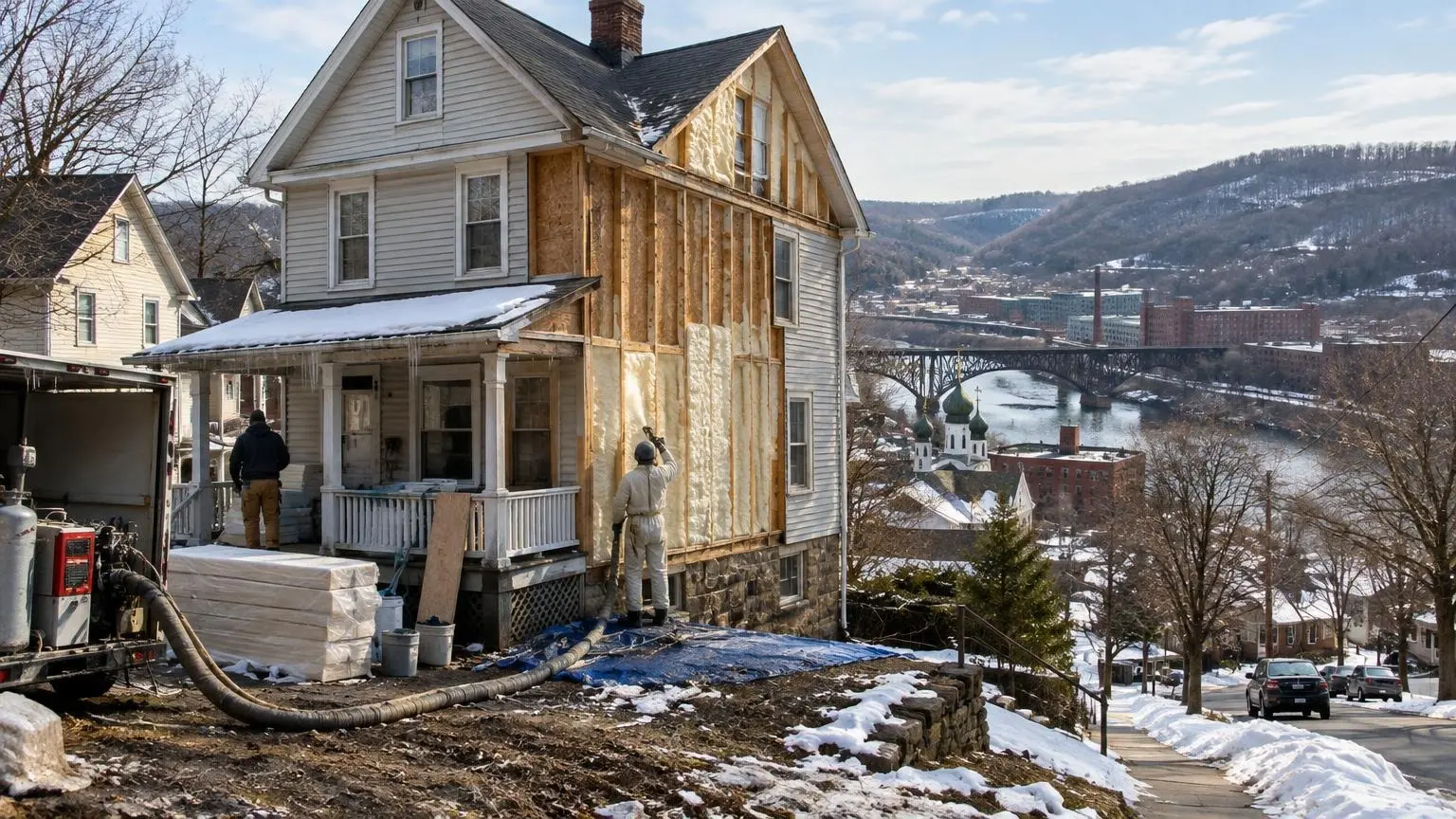
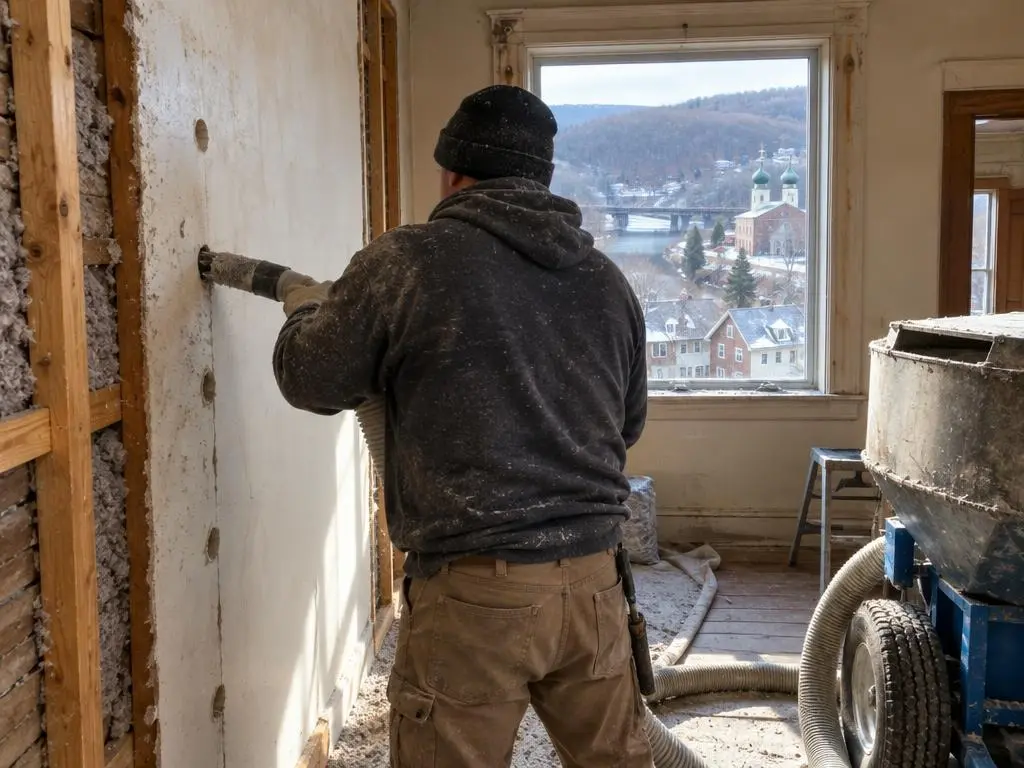
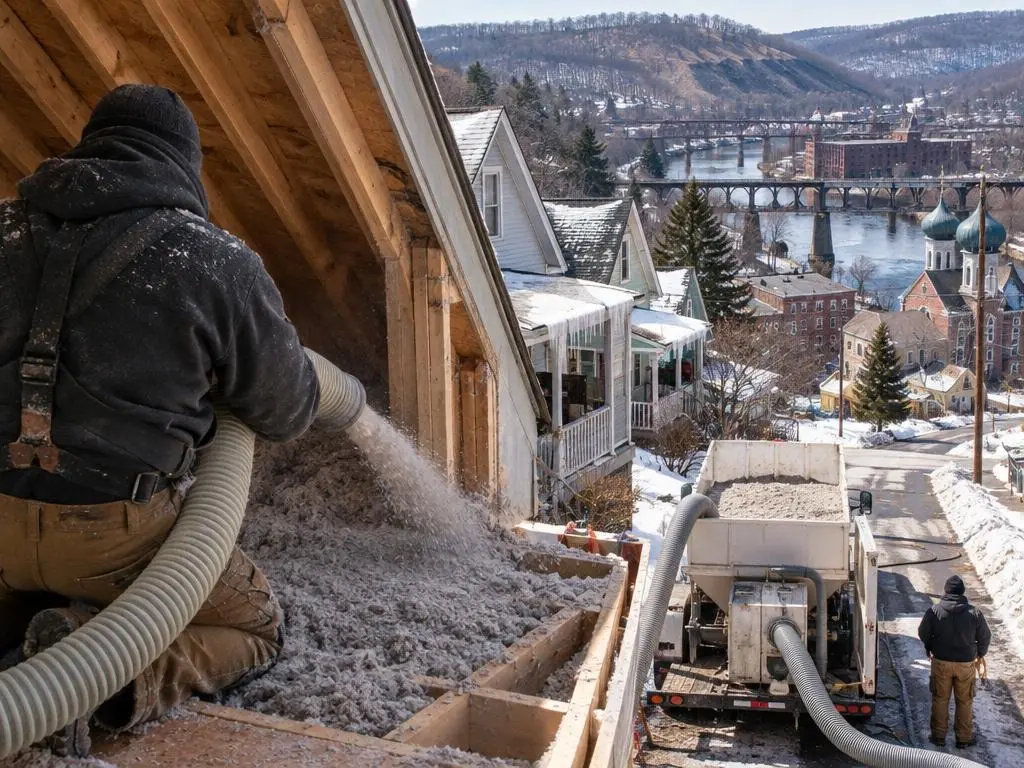
Blown-in cellulose insulation is loose fill made mostly from recycled paper treated for fire resistance. We blow it through a hose onto attic floors and into closed floor and wall cavities. On an open attic floor, it is usually the most economical way to reach R-49 or R-60. It packs around old framing, wiring and odd gaps better than batts.
Seal first
Cellulose slows air better than loose fiberglass, but it is not an air barrier. So we seal the attic floor first: wall tops, chimneys, stacks and fixtures. Then we blow to depth.
Cellulose or fiberglass
Fixr lists blown cellulose at $1.75 to $3.80 per square foot and blown fiberglass at $1.65 to $2.60. Cellulose is denser and fills around obstacles well. Fiberglass is lighter and settles less. We explain which suits your attic.
How deep
To reach R-49, loose fill usually needs 14 to 18 inches, depending on the product. We set depth markers. The Department of Energy recommends R-60 for an uninsulated Zone 5 attic.
Floors over porches and unheated spaces
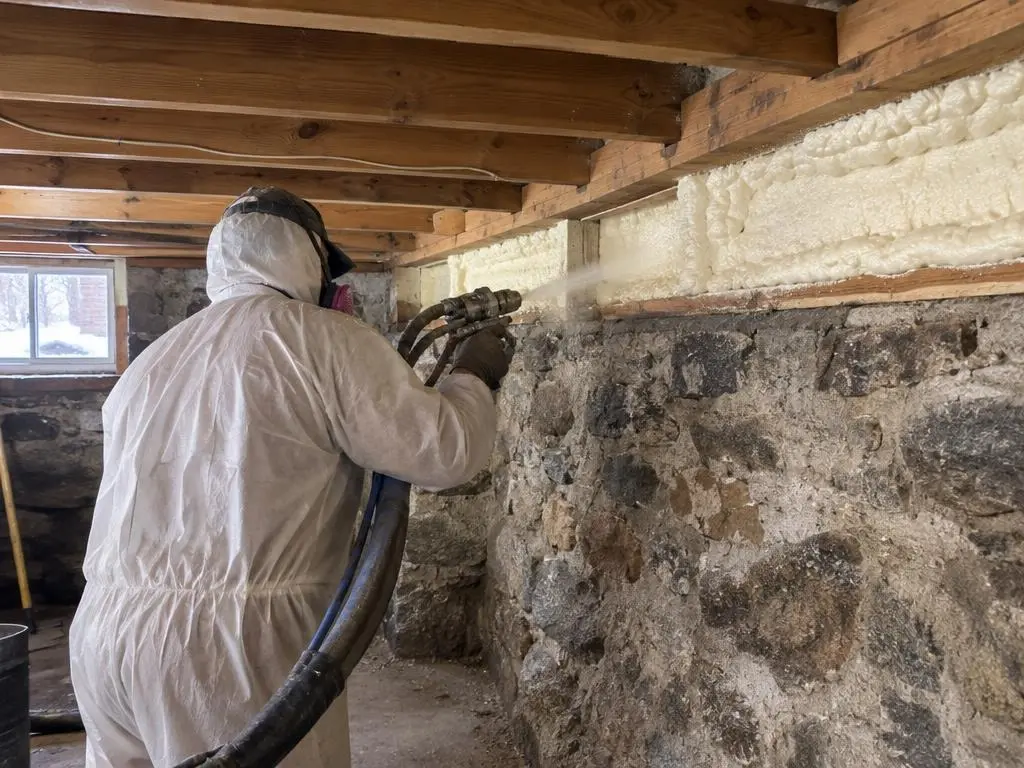
Enclosed porches, additions over crawl spaces and rooms over unheated garages often have cold floors. We can net and blow floor cavities or dense-pack them.
Old attics
If existing insulation is dry and clean, we add on top. If it is wet, rodent-soiled or vermiculite, we recommend removal or testing first.
Ventilation
We install baffles at the eaves so cellulose does not block soffit vents.
Why cellulose in old houses
Cellulose packs densely around the irregular framing of old houses, fills small voids, and resists air movement better than loose fiberglass. It is made largely from recycled paper and treated with borates for fire resistance. In old houses with plaster ceilings, the weight of a deep layer is not a problem for sound framing, but we check for sagging ceilings first.
What depth looks like in a valley attic
Many Scranton attics are steep and narrow, with limited floor area but deep space at the center and shallow space at the eaves. We blow to depth across the open floor and use baffles and foam at the eaves so we can get as much R-value as possible without blocking the soffit vents.
Getting ready
Before we blow, it helps to clear stored items away from the attic floor. If the attic is used for storage, we can leave a raised platform area or talk through options.
Rebate
PPL's rebate form lists attic insulation at 75% of cost up to $500 or $200 depending on heating type. Get a free estimate
Where We Blow In
Attics and floors.
Open attic floors
Cellulose to R-49 or R-60.
Topping up old insulation
Adding depth over dry material.
Porch and addition floors
Netted or dense-packed.
Hatch dams and baffles
Keeping insulation in place.
Attic stairs covers
Insulated and sealed.
Published Blown-In Costs
| Job | Range and source |
|---|---|
| Blown-in, per sq ft | $1.00 to $2.80 (HomeGuide); $1.65 to $3.80 (Fixr) |
| Attic | $900 to $3,600 (HomeGuide); $1,750 to $5,500 for about 1,500 sq ft (Fixr) |
| Exterior walls | $1,900 to $7,800, $1.10 to $3.70 per sq ft (HomeGuide); $2,000 to $4,000 (Fixr) |
| Dense-pack cellulose | $1.60 to $4.20 per sq ft (HomeGuide) |
| Fiberglass / cellulose | $1.65 to $2.60 / $1.75 to $3.80 per sq ft (Fixr) |
| Typical job | $800 to $3,000 (HomeGuide); $3,000 to $7,000 (Fixr) |
National figures from HomeGuide (November 2025) and Fixr (August 2025). Depth, access and air sealing change the total; the written estimate is the price.
How a Blown-In Job Runs
1. Check
Measure and inspect.
2. Quote
Depth, R-value and sealing.
3. Seal
Close the gaps.
4. Blow
To depth with markers.
5. Clean up
And show you.
Why Choose Us for Blown-In Cellulose Insulation
Seal included
Not an add-on.
Depth markers
You can check.
Honest advice
Fiberglass or cellulose explained.
Blown-In Cellulose Insulation Questions
Is cellulose safe?
It is treated for fire resistance. It must still be kept away from chimneys and non-rated fixtures.
Does cellulose settle?
Some, so we blow extra to account for it.
Is blown-in cheaper than foam?
On an open attic floor, usually much cheaper per R-value.
How long does it take?
Usually a day.
Can my plaster ceiling hold deep cellulose?
Sound ceilings can. We check for sagging or loose plaster first.
Do I need to empty my attic?
Clearing the floor helps. We can plan around a storage area.
Blown-In Cellulose Insulation Service Areas
- Spray Foam Insulation in Scranton, PA
- Spray Foam Insulation in Dunmore, PA
- Spray Foam Insulation in Dickson City, PA
- Spray Foam Insulation in Clarks Summit, PA
- Spray Foam Insulation in Old Forge, PA
- Spray Foam Insulation in Taylor, PA
- Spray Foam Insulation in Moosic, PA
- Spray Foam Insulation in Olyphant, PA
- Spray Foam Insulation in Throop, PA
- Spray Foam Insulation in Archbald, PA
- Spray Foam Insulation in Carbondale, PA
- Spray Foam Insulation in Pittston, PA
- Spray Foam Insulation in Wilkes-Barre, PA
- Spray Foam Insulation in Kingston, PA
Get a Blown-In Cellulose Insulation Estimate
Tell us about your attic. We will look and quote.